
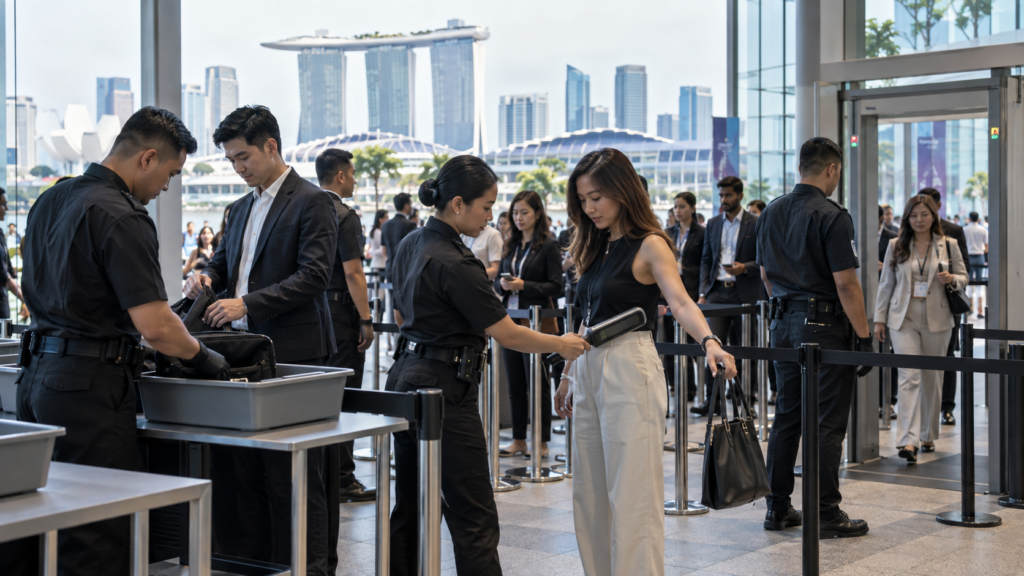
Singapore’s reputation for hosting world-class events depends, in part, on its ability to keep them safe. Event security officers make that possible. They are the first to respond when something goes wrong, and the reason most things do not. The role is more varied and more demanding than it often appears, and it deserves to be understood that way.
This article looks at the key areas event security officers are responsible for, and what it takes to handle them well.
Event security is not the same as static guarding. The venue is temporary. The crowd is large and unfamiliar with the space. Conditions shift quickly as the event progresses.
That combination raises the stakes considerably. Large numbers of people in an enclosed space, heightened emotions, and sometimes alcohol, can turn a small incident into a serious one very quickly. So event security officers need more than general security knowledge. They need training that is specific to the event environment, and the judgement to apply it under pressure.
Controlling who enters a venue and where they can go once inside is where event security begins. This goes well beyond checking tickets. It includes:
Poor access control creates gaps that are very difficult to close once an event is underway. Getting it right from the start sets the foundation for everything else.
Most events in Singapore require officers to screen attendees. That means bag checks, handheld metal detector screening and in larger or higher-security events, walk-through screening and X-ray machine operation.
Screening well requires two things: technical competence and people skills. Officers need to be thorough without creating long queues that frustrate attendees. They also need to handle the process calmly and professionally, especially when guests are unfamiliar with what is being asked of them. Done well, screening is efficient, consistent and barely noticeable. Done poorly, it sets the wrong tone for the entire event.
At a large event, how people move matters as much as how they behave. Poorly directed crowds lead to congestion, frustration and in serious cases, dangerous compression. Officers responsible for crowd control need to understand how large groups move and where problems are likely to develop before they do.
Key responsibilities include:
Good crowd control is about anticipation. Officers who can read a crowd and act early are far more effective than those who wait for a problem to form.
Events are not exempt from serious emergencies. Medical incidents, fights, fires and evacuation scenarios can all occur, and the temporary nature of the venue makes preparation even more important.
Event security officers need to know the venue’s emergency exits, assembly points and evacuation routes before the event begins. They also need to know their specific role within the emergency response plan. When something happens, there is no time to figure that out on the spot. Beyond that, officers should be able to provide initial assistance in a medical situation and manage crowd behaviour during an evacuation without causing additional panic. A thorough pre-event briefing, backed by proper training, is what makes that level of readiness possible.
The safety of a large event comes down to the people responsible for it. Technology, barriers and protocols all play a role. But they do not replace the judgement and professionalism of a trained officer on the ground. That is where event security is won or lost, and it is why the right training matters so much.
KnowledgeTree offers three WSQ-accredited, SSG-approved event security courses for officers looking to qualify for specialist event deployment:
Each course covers a distinct area of event security work, and completing them opens up deployment opportunities across Singapore’s major events. Visit this page to find out more and register for the course that fits your goals.