
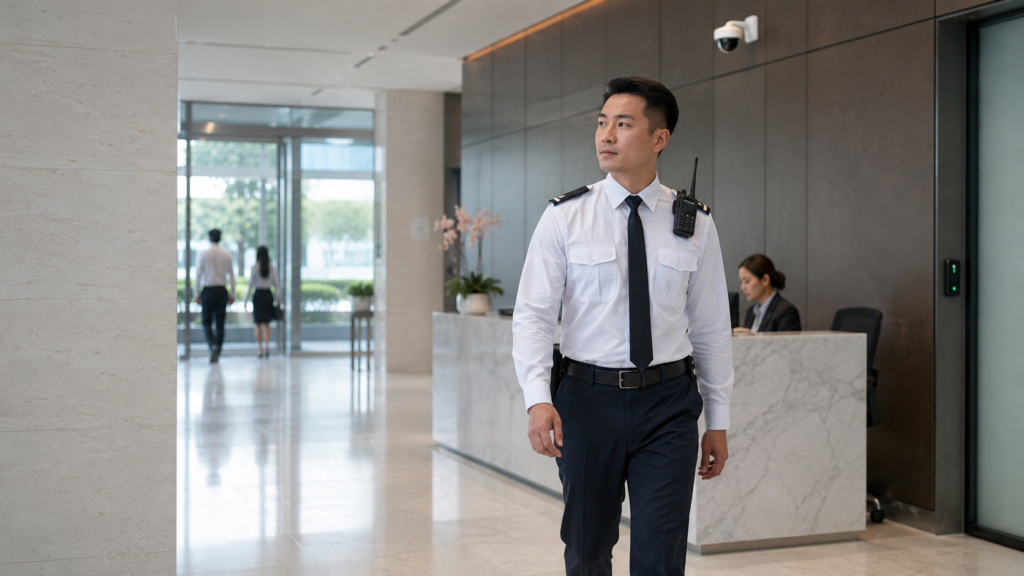
Starting out as a security officer means stepping into a role that is more varied, more demanding and more meaningful than it might appear from the outside. The first month will test your attention, your composure and your ability to follow procedures under pressure. It will also show you what the job is really about. This article is a practical guide to what that first month typically looks like, and how to make the most of it.
The first thing you will do in any new security posting is learn the environment. A facility that looks straightforward from the outside has layers of detail that only become visible once you are working within it daily. In your first weeks, focus on:
Ask questions. Asking early is always better than discovering a gap when it matters.
Your Basic Licensing Unit training prepared you for this role. The first month is where that preparation meets the reality of a working environment. The three WSQ courses that form the foundation of your licence are:
The gap between knowing these skills and applying them fluently narrows quickly with experience.
Documentation is one of the most important and most underestimated parts of the role. A well-written incident report protects you, protects the facility and creates a record that can be acted on. In your first month, pay close attention to how experienced colleagues document incidents. Good reports share these qualities:
If your facility uses a specific reporting format, learn it early and use it consistently.
Security work often involves long hours, rotating shifts and extended periods where nothing unusual happens. Staying alert through all of it takes deliberate effort. Practical habits that help include:
Fatigue affects judgement. Recognising when your concentration is dipping and taking steps to address it is part of doing the job well.
The habits you form in your first month tend to stick. Officers who develop strong professional standards early, around punctuality, communication and documentation, carry those standards throughout their career. A few habits worth building from day one:
The quiet shifts are where habits are formed. The busy ones are where those habits are tested.
Every experienced, respected security professional went through a first month exactly like yours. They felt the same uncertainty, asked the same questions and made the same small mistakes. What separated those who built strong careers from those who did not was not talent or luck. It was the decision to take the role seriously from the very beginning, to keep learning and to show up fully prepared for every shift. That decision is entirely yours to make.
Before you can step into your first posting, you will need to complete the three Basic Licensing Unit courses that form the foundation of a security officer’s licence in Singapore. KnowledgeTree offers all three (PGPS & OBSE, HSIS, RTT) as well as other WSQ-accredited, SSG-approved programmes designed to prepare you for the real demands of the role. Flexible scheduling is available, and training materials are provided. Register now at ktree.com.sg and take the first step towards a career built on solid ground.