
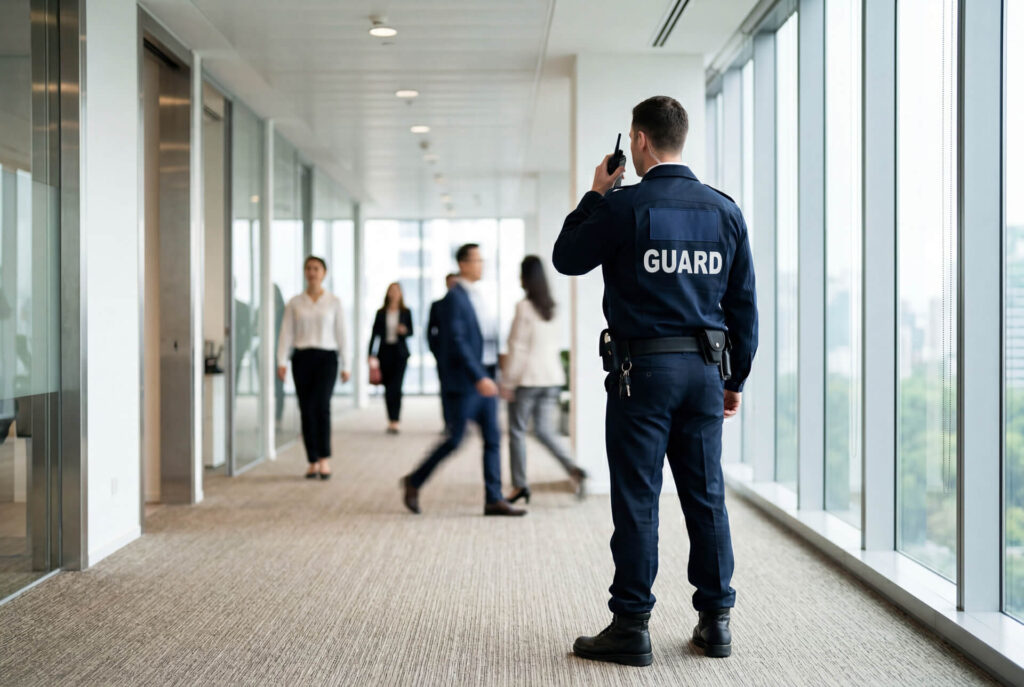
A security patrol is only as effective as the thinking behind it. In large facilities, the sheer scale of the environment creates natural blind spots, and without a structured approach to coverage, officers can spend entire shifts covering familiar ground while vulnerable areas go unchecked. The good news is that most coverage gaps are fixable, and the fixes do not always require additional headcount.
Improving patrol coverage starts with an honest assessment of what is currently being covered and what is not. Many facilities operate on patrol routes that were designed years ago and have never been updated to reflect changes in layout, occupancy or risk profile.
Begin by mapping the entire facility and categorising areas by risk level. Consider:
Once the map is complete, overlay current patrol routes against it. The gaps that emerge are the starting point for every other improvement on this list.
Predictable patrols offer limited deterrence. An intruder or opportunistic threat who has observed your facility will quickly identify patterns in officer movement and plan around them. Varying both the route and the timing of patrols removes that predictability.
This does not have to mean abandoning structure entirely. Rather, it means building in deliberate variation, such as:
The goal is to make officer presence feel unpredictable to anyone observing the facility from the outside.
In large facilities, patrol assignments often default to geography instead of risk. Officers cover the areas closest to their post, or the routes that are easiest to walk, which upon closer inspection can be slightly counterintuitive. A risk-based approach assigns coverage according to where the consequences of a security failure are greatest.
Higher-risk zones should receive more frequent patrols and, where possible, dedicated coverage during peak vulnerability periods such as early morning hours, shift changes and periods of low occupancy.
Officers cannot be everywhere at once, and in large facilities, technology can extend the effective reach of a patrol team considerably. CCTV systems, access control logs and alarm monitoring all generate information that supplements what officers observe on the ground.
Where these systems are in place, officers should be trained to:
Technology supports patrol coverage—it will never replace the judgement of a trained officer on the ground.
Coverage gaps often occur not within a shift but between them. When handovers are rushed or informal, the incoming officer may be unaware of incidents, suspicious activity or areas that require closer attention during their shift.
A structured handover should include:
A five-minute handover done properly is worth considerably more than a 10-minute one done carelessly.
Supervisors play a critical role in maintaining patrol standards across large facilities. Regular post inspections verify that officers are covering assigned areas, following correct procedures and maintaining the standard of documentation the role requires.
Debriefs after each shift, even brief ones, create a feedback loop that helps identify recurring gaps, equipment issues and areas where additional coverage may be needed. Over time, that information shapes better patrol planning.
General security training gives officers a foundation. As another layer of reinforcement, facility-specific training should build on it. Officers patrolling a large industrial plant face different challenges from those working in a hospital or a shopping complex, and their preparation has to reflect that.
Effective environment-specific training covers:
Officers who understand the environment they are working in patrol it more attentively and respond to incidents more effectively.
A patrol plan that worked well six months ago may no longer reflect the current risk profile of the facility. Changes in tenancy, construction activity, shifts in operating hours and seasonal variations in occupancy can all affect where coverage is most needed.
Patrol plans should be reviewed at regular intervals and updated whenever a significant change occurs. Key inputs for that review include:
The most effective patrol coverage is not static. It evolves as the facility and its risks evolve.
The most reliable patrol coverage comes from officers who understand what they are protecting, why their route matters and what to do when something does not look right. Structure and planning provide the framework. Training provides the capability to work within it. In large facilities, both are necessary, and neither is sufficient without the other.
The Guard and Patrol, Access Control Management course at KnowledgeTree provides security officers with the foundational skills to conduct patrols effectively, manage access control and operate basic security equipment to a nationally recognised standard. Offered as an SSG-approved, WSQ-accredited programme, it is the starting point for anyone entering the security industry and a valuable refresher for officers already in the field. Register now and build the skills that professional patrol work demands.