
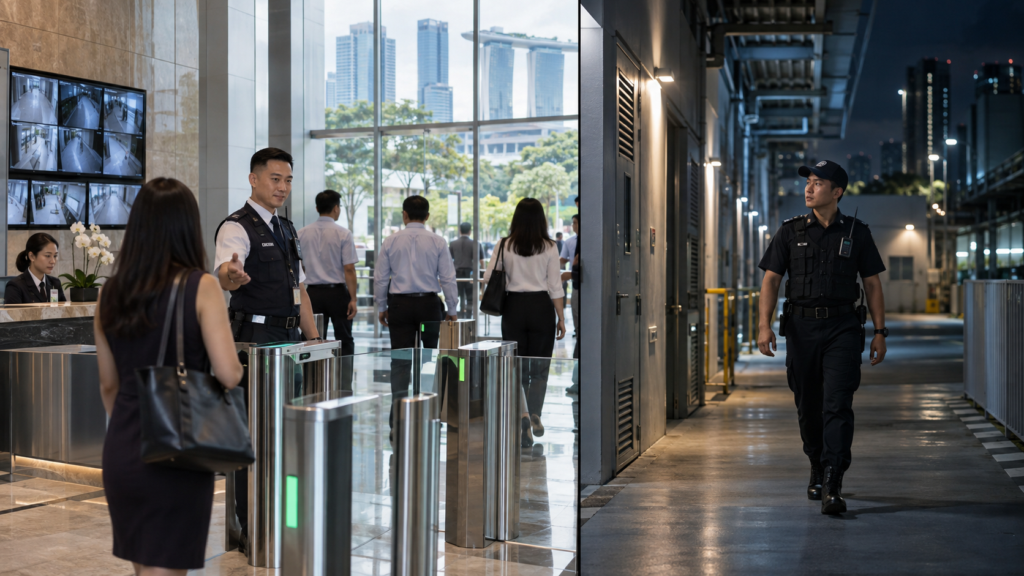
Security work does not stop when the sun goes down. Across Singapore’s offices, shopping malls, industrial sites and residential developments, security officers work around the clock to keep people and premises safe. Day shifts and night shifts are both essential, but they are not the same job. The responsibilities differ, the challenges differ and so do the demands on the officer. Understanding what each involves helps you make an informed decision about where you want to start and where you want to go.
Day shift security work tends to be busier and more people-facing. Officers are managing higher footfall, more frequent access requests and greater interaction with staff, visitors and the public.
Core responsibilities typically include:
Day shift officers are often the most visible security presence on a site. That visibility comes with a responsibility to project professionalism and calm, especially when managing crowds or handling disputes in public-facing environments.
The day shift suits officers who prefer working alongside a full team and having regular interaction with people. Supervisors and management are typically on site, which means support is more readily available.
That said, the day shift is rarely quiet. High footfall increases the frequency of access control incidents, confrontations and situations requiring de-escalation. Officers need to stay sharp across a full shift, even when the environment feels routine. Complacency is a real risk when everything appears to be running smoothly.
Night shift security work is quieter in terms of foot traffic, but it demands a different kind of vigilance. With fewer people on site, officers often have greater autonomy and broader patrol responsibilities.
Core responsibilities typically include:
Night shift officers are often the sole or primary security presence on site. That means decisions need to be made independently and escalation protocols must be well understood before the shift begins.
Read: 12 Locations Where Remote Surveillance Is Essential
For officers who prefer working with greater independence, the night shift can be a good fit. The pace is different, the environment is calmer and there is often more time for thorough patrol coverage.
The challenges, however, are real. Fatigue is the most significant. Sustained alertness during the early hours of the morning requires deliberate effort, particularly during long shifts or when routines become repetitive. The reduced presence of colleagues and supervisors also means that officers need strong self-discipline and a clear understanding of their responsibilities. Incidents that do occur at night, such as break-ins, trespassing, or medical emergencies, often require an immediate and confident response with less backup available.
| Day Shift | Night Shift | |
| Foot traffic | High | Low |
| Public interaction | Frequent | Minimal |
| Supervision available | Usually yes | Often limited |
| Patrol scope | Targeted zones | Full premises |
| Primary challenge | Sustained alertness in busy environment | Fatigue and independent decision-making |
| Incident types | Access disputes, crowd management, visitor issues | Break-ins, trespassing, alarm response |
| Team presence | Full team on site | Smaller or solo coverage |
| Best suited to | Officers who prefer structure and interaction | Officers who prefer autonomy and independence |
Both shifts are demanding in their own way. Neither is easier than the other; they simply ask different things of the officer.
The best shift for you depends on your working style, your lifestyle and the kind of challenges you want to take on. Day shift officers thrive on structure, visibility and people management. Night shift officers tend to be self-reliant, methodical and comfortable with extended periods of independent work. Both are valuable, and both require the same foundational training to do well. What matters most is going in prepared.
Whether you are preparing for day or night shift work, the starting point is the same: completing your Basic Licensing Unit courses to obtain your security officer licence in Singapore. For that, KnowledgeTree offers WSQ-accredited, SSG-approved Security Officer (SO) courses designed to equip new entrants with the skills the role demands from day one. Explore the full range of courses and available schedules at ktree.com.sg and take the first step towards a career in security.
For more information, contact us here.